Deer eating your hostas is one of the most frustrating problems a gardener can face. Hostas rank among deer’s absolute favorite plants, but combining two or three protective methods — such as liquid repellents, proper fencing, and deer-repelling border plants — gives you the strongest defense against repeat damage.
Table of Contents
Why Deer Are So Drawn to Hostas
Hostas are lush, leafy, and easy to reach at ground level, which makes them basically a free buffet for deer. Unlike a lot of plants that have strong scents, thorns, or bitter compounds to keep wildlife away, hostas have none of those natural defenses. Deer are also creatures of habit. Once they figure out your hostas are a reliable food source, they will keep coming back, usually at night when they feel safest.
Getting a handle on deer behavior is actually the first step toward outsmarting them. The methods below work with what deer naturally dislike, fear, and tend to avoid.
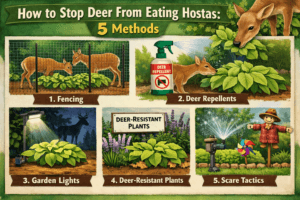
Use a Liquid Repellent Around Your Hostas
One of the easiest and most affordable places to start is applying a liquid deer repellent. These products are widely available at garden centers and home improvement stores, and they work by combining unpleasant smells and tastes that deer instinctively avoid. Common ingredients include garlic, thyme oil, whole egg solids, potassium sorbate, and sodium lauryl sulfate.
According to Benjamin Hanley, landscape designer and founder of Hanley Landscape Design, liquid repellents can be effective, especially on properties with smaller deer populations. But he is quick to point out that these products wash off in rain and lose their punch fast, so you will need to keep reapplying them throughout the growing season.
Think of liquid repellents as a short-term tool or one piece of a bigger plan, not a stand-alone fix.
How to Stop Deer From Eating Your Hostas With a Proper Fence
When it comes to keeping deer out for good, a physical barrier is your best bet. Deer are capable jumpers, but a fence that stands at least six feet tall will deter the vast majority of them from even trying to get into your yard.
Evan Torchio, arborist and founder of Tree Menders, puts it plainly: the only truly foolproof method for keeping deer away from your plants is a fence.
You Do Not Have to Build an Ugly Fence
If a traditional fence feels too industrial or out of place in your yard, you have better options. A dense wildlife hedge planted along your property line can work as both a visual screen and a physical barrier. Or, for a low-cost approach, wooden stakes and thick fishing line can be surprisingly effective. Deer have a hard time detecting the fishing line, and when they bump into it unexpectedly, that strange sensation is usually enough to make them back off and avoid the area going forward.
Install Motion-Activated Lighting
Deer prefer to forage at night, when they feel less exposed. Motion-activated lights disrupt that routine by flooding your yard with light the moment a deer gets close. The sudden brightness triggers their survival instincts, making them feel vulnerable and out in the open.
Hanley points out that this can push deer away from your hostas and toward less important parts of your yard. And since the lights only switch on when triggered, it is an inexpensive option that does not create a constant glare or light pollution problem.
How to Stop Deer From Eating Your Hostas by Planting Smarter
Strategic planting is one of the most natural ways to protect your hostas, and it can actually make your garden look better at the same time. There are two solid approaches here.
Plant Deer-Repelling Borders
Deer strongly dislike plants with intense fragrances. Planting lavender, marigolds, or chives around the edges of your hosta beds creates a sensory barrier that deer tend to steer clear of. Some of these plants look great alongside hostas too, so your garden does not have to trade beauty for protection.
Coral bells and bigleaf aster are two plants deer avoid that also pair nicely with hostas visually, making them great buffer choices.
Create a Dedicated Wildlife Feeding Zone
If you have a larger property, you can redirect deer away from your hostas by giving them something they like even more. Deer naturally go for blueberries, oak acorns, and native grasses. Setting aside a corner of your yard for these plants can draw deer away from your prized garden areas. This works best when there is enough space to keep the wildlife zone well separated from your hostas.
Combining Methods Works Best
No single method works perfectly in every situation. Deer populations, property sizes, and local conditions all play a role in which strategies will actually deliver results for you. Combining two or three approaches — like a liquid repellent along with motion lighting and a planted border — gives you much stronger protection than relying on any one thing alone.
Consistency is what really matters here. Deer are persistent, and any gaps in your routine are exactly what they will take advantage of.
Frequently Asked Questions
Will hostas grow back after deer eat them?
Yes, hostas are hardy perennials and can recover from deer damage, especially when the roots are still intact. New growth will typically come back, though heavy damage late in the season may limit the plant’s ability to bounce back before winter hits.
What smells do deer hate most?
Deer are strongly put off by garlic, sulfur-based smells, lavender, and predator scents. This is exactly why many liquid repellents use egg solids and garlic as their main active ingredients.
How high can deer jump?
Higher than most people expect. Deer can often clear fences under six feet without much trouble. A fence standing at least six to eight feet tall is what you want for reliable protection.
Are there hosta varieties that deer avoid?
No hosta variety is truly deer-proof, but some gardeners find that thicker-leaved varieties or those with a slightly waxy texture tend to be less appealing than softer-leaved types.
How often should I reapply liquid deer repellent?
It depends on the product and the weather, but most liquid repellents need to go back on every one to two weeks, and right after any heavy rainfall.